Frontier MechanicsField report / 067
Frontier Mechanics Week 67: Sentinel-6B measures a rising baseline, Kalshi doubles again, Germany hardens orbit, and New Glenn adds engines
A radar altimeter continued a climate record, prediction-market capital accelerated, Germany published its first space-security strategy, and Blue Origin proposed a 9×4 heavy-lift variant.
A measurement is most valuable when somebody commits to repeat it. Sentinel-6B launched to continue the multi-decade sea-level record. TechCrunch reported that Kalshi had raised again at an $11 billion valuation, betting that event probabilities would retain users beyond news cycles. Germany published its first space-security strategy. Blue Origin disclosed a larger New Glenn architecture one week after recovering a booster.
The week was about continuity premiums. Investors, governments, and scientists pay more for a system expected to be there next time. Continuity is not inertia. It requires overlap, calibration, replacement hardware, and institutions willing to fund an output after novelty fades.
Continuity and liquidity were the week's paired themes. Sentinel-6B overlapped an altimetry record so measurements remained comparable. Kalshi's volume attracted another valuation. Germany funded awareness so military space decisions had persistent state. Blue Origin sold a nine-flight manifest that now had to become cadence. A continuous record can be more valuable than one excellent point.
Climate instrumentation
Sentinel-6B protects the overlap in the sea-level record
Sentinel-6B launched on November 17 to continue high-precision measurement of global sea-surface height. It follows Sentinel-6 Michael Freilich in the Jason series' reference orbit. The mission's scientific asset is not one spacecraft. It is a calibrated record extending across different instruments and decades.
Radar altimetry sends microwave pulses toward the ocean and measures round-trip time. Converting that delay into sea-surface height requires the spacecraft orbit to be known precisely and corrections for atmospheric water vapor, ionosphere, tides, waves, and instrument bias. Centimeters emerge only after many errors larger than centimeters are modeled and removed.
Sea level varies with winds, currents, pressure, temperature, and ice mass. Repeated global measurements reveal both short-term ocean dynamics and the slower climate trend. The same observations improve weather and ocean forecasts. A reference mission supplies the stable baseline against which other altimeters can be calibrated.
Overlap between Sentinel-6A and 6B is crucial. Simultaneous measurements distinguish a real ocean change from an offset between instruments. Without overlap, a small calibration step can masquerade as acceleration or erase it. Climate infrastructure therefore launches the replacement before the predecessor fails.
The mission is a quiet argument for institutional endurance. NASA, ESA, Eumetsat, NOAA, and European partners share instruments, operations, processing, and distribution. The engineering triumph is that a researcher can compare today's ocean with one measured by a different spacecraft years ago and know how uncertainty traveled between them.
Satellite altimeters send radar pulses to the ocean and measure return time, correcting for orbit, atmosphere, tides, sea state, and instrument bias. Millimeters of global mean sea level emerge from enormous averaging and careful calibration. A new satellite can introduce a small offset that looks like climate signal.
Flying Sentinel-6B alongside its predecessor allows tandem comparison over the same ocean. Ground truth from tide gauges and calibration sites links the record to earlier missions. Overlap converts two instruments into one time series. Without it, improved precision may still damage trend estimation.
Operational products also use wave height, wind, and ocean circulation. Open, stable data supports forecasting and coastal planning. The mission's value grows with decades of continuity, which requires funding replacement spacecraft before the old one fails. Climate infrastructure must be scheduled around records, not political attention.
Sea-level records need temporal overlap because instruments and orbits differ. Sentinel-6B's radar altimeter measures range to the ocean while precise orbit determination supplies spacecraft position; atmosphere, waves, tides, and geophysical corrections turn range into sea-surface height. Small biases can masquerade as climate trend when accumulated over decades.
Flying alongside a predecessor lets scientists estimate offset and drift under the same ocean conditions. Calibration sites, crossover points, and independent sensors reveal errors. The handoff should publish uncertainty and processing-version effects. Continuity is not merely avoiding a blank date; it is preserving the traceability of millimeters per year.
Operational users also need near-real-time observations for ocean forecasting, while climate analysis values stability. One instrument must serve both. Redundant ground processing and open archives make the record resilient to spacecraft or institutional changes. The overlap is a deliberate expense that buys confidence in a slow planetary signal.
Market microstructure
Kalshi's second valuation jump turns liquidity into the thesis
TechCrunch reported on November 20 that Kalshi had raised $1 billion at an $11 billion valuation, little more than a month after the round that priced it at $5 billion. Kalshi did not publicly announce the Series E until December 2, so the event in this week's window was the financing report—not the later company release. The valuation nevertheless expressed the same network-effect bet: more contracts attract traders, more traders deepen liquidity, and deeper liquidity makes prices more useful to people who may never place a trade.
Liquidity is specific, not global. Heavy volume in elections or sports does not guarantee a tight market in inflation, regulation, or technology milestones. Market makers need models, hedges, capital, and confidence that settlement rules will not surprise them. An exchange should publish spread and depth by category, not let total notional volume imply every probability is equally robust.
Prediction markets also face correlated attention. Participants often read the same polls, social feeds, and models. A crowd can aggregate independent fragments or amplify a common error. Prices update quickly to public news but may underweight slow structural evidence that is difficult to trade with precise timing.
An $11 billion platform valuation reflects expected fee revenue, not the accuracy of any one contract. The business can prosper if users trade frequently even when their forecasts are poor. Product incentives should reward calibration, expose historical scores, and make it easy to compare the closing probability with eventual outcomes across many events.
The most defensible role is infrastructure for disagreement. A well-written contract and open order book show what price moves conviction today. It is a sensor, not an oracle. The valuation will be justified if organizations learn to integrate that sensor into decisions without surrendering them to the number on the screen.
Liquidity improves prediction-market prices by narrowing spreads and making it worthwhile for informed traders to participate. Volume also attracts entertainment trading and correlated retail flow. Kalshi's valuation assumed that event contracts become a broad asset class and a data product, not only election speculation.
Market quality should be measured by spread, depth, calibration, manipulation, and settlement. Subsidized market makers can create apparent liquidity that disappears in stress. Contract proliferation fragments attention; a few popular questions may support tight markets while thousands remain empty.
Regulation gives Kalshi legitimacy and cost. Event categories can resemble gambling or create incentives around harm. The company needs boundaries and surveillance while preserving expressive markets. Revenue volume alone does not prove social information value; decision use and forecast calibration do.
Kalshi's valuation thesis rests on liquidity because a market with more participants produces tighter spreads, deeper books, and potentially better prices. But liquidity can be subsidized by market makers and promotions, and volume can concentrate in a few sensational contracts. Report organic participants, retention, depth, and revenue net of incentives by category.
Network effects are not automatic. Traders can multi-home across exchanges, and each contract's resolution rules create local trust. Regulatory licenses and distribution help, while ambiguous settlement can damage the whole venue. The platform needs standardized contract design and appeals whose outcomes are faster than the event's news cycle.
A second valuation jump can price future financial products beyond current event markets. The risk is that speculative engagement resembles gambling more than risk transfer, attracting scrutiny and unstable users. Durable value comes when businesses, researchers, and individuals use prices and positions to hedge or make decisions. Liquidity is a means; decision utility is the demand underneath it.
Security space
Germany treats orbital awareness as defense infrastructure
Germany advanced plans this week for a larger military-space investment spanning secure communications, reconnaissance, and space-domain awareness. The policy reflected a changed threat model: orbital services support terrestrial forces, while satellites themselves face jamming, cyber intrusion, dazzling, close approach, and debris.
Space-domain awareness begins with observations from radar, telescopes, radio sensors, and satellite telemetry. Cataloging an object requires estimating its orbit and uncertainty, then updating the state as drag and maneuvers change it. A close-approach warning is a probability distribution, not a known collision. Poor covariance can produce either constant alarms or false confidence.
Military awareness adds intent, which physics alone does not reveal. A spacecraft approaching another may be inspecting, threatening, or merely passing under similar orbital dynamics. Persistent multi-sensor tracking and behavioral history improve attribution. Classification decisions need to preserve uncertainty because an overconfident label can escalate policy.
Resilience comes from distribution and reconstitution. Several smaller satellites can degrade gracefully and be replaced faster than one exquisite platform, but they require more launches, ground automation, networking, and spectrum. Secure communications need anti-jam waveforms, steerable beams, cryptographic key management, and terminals deployed with forces.
European autonomy is not achieved by purchasing only domestic logos. It requires the ability to manufacture, launch, operate, update, and replenish under pressure. Germany's investment can create that stack if procurement rewards interoperable services and exercises failure. A constellation untested against jamming is a diagram of resilience, not resilience itself.
Space-domain awareness combines radar, optical telescopes, radio sensing, catalogs, and intelligence to estimate objects and behavior. Germany's investment supports sovereign access to observations and command. Shared allied catalogs improve coverage while sensitive data and differing confidence complicate fusion.
Tracking accuracy depends on sensor geometry and revisit. Small maneuvers create uncertainty that grows until another observation. Operators need conjunction warnings and intent context, not only coordinates. Military systems also detect interference and characterize satellites whose capabilities are not visible from orbit alone.
Hardening includes distributed sensors, protected ground systems, cyber defense, and trained operators. Buying spacecraft without analysis capacity creates data debt. The operational metric is time from event to confident decision and recovery after node loss, not sensor count.
Orbital awareness combines telescopes, radar, radio-frequency sensing, owner ephemerides, and intelligence into uncertain tracks. Germany's defense infrastructure must maintain catalogs, predict conjunctions, and detect maneuvers while distinguishing sensor error from behavior. More observations help only if timestamps, frames, and custody can be fused quickly.
Sovereignty means the ability to task sensors and retain analysis during crisis, not isolation from allies. Shared data improves geometry and attribution; independent capacity reduces reliance on one partner. Interfaces need confidence and provenance so an operator can weigh a national observation against a commercial or allied report.
The system should be exercised against jamming, cloud, cyber disruption, and deceptive maneuvers. Metrics include update latency, covariance, custody through close approaches, and time to alert. Buying sensors without analysts, networks, and doctrine produces an expensive sky survey rather than defense infrastructure.
Launch markets
New Glenn 9×4 spends engines to buy a wider mission envelope
On November 20, Blue Origin disclosed New Glenn 9×4, a future configuration named for nine first-stage BE-4 engines and four second-stage BE-3U engines. The announced vehicle sits above the seven-by-two baseline and targets a subset of missions that need substantially more performance. The multiplication sign matters: this was an engine-count architecture, not a promise of nine near-term flights.
Adding engines is not a linear payload knob. More thrust changes tank flow, feed-system transients, base heating, acoustic loads, plume interaction, structural modes, and the loads introduced through the thrust structure. The stage must survive a new coupled environment while the guidance system manages different acceleration and engine-out cases. Common engines can preserve supply-chain learning, but the integrated vehicle still needs its own qualification evidence.
The four-engine upper stage attacks a different constraint. High-energy payloads need not only liftoff thrust but impulse after staging, restart reliability, propellant management, and enough coast duration to reach the required insertion. Subcooled propellants raise density and performance while tightening thermal operations: colder fluids can increase loaded mass, yet hold time, boiloff, and conditioning at the pad become more demanding.
A larger variant broadens Blue Origin's addressable missions—heavy national-security payloads, lunar logistics, and multi-manifest deployments—but risks splitting a young production system. Tooling, ground equipment, software, mission analysis, spares, and certification must accommodate two configurations before the original has reached cadence. The economics work if shared hardware dominates variant-specific overhead.
The useful milestone is therefore not a maximum-payload graphic. It is a configuration-control plan that lets the 9×4 learn from the baseline without making every baseline flight wait for the upgrade. Blue Origin recovered a stage the prior week; this week it exposed how aggressively it intends to spend that learning.
Selling nine flights creates backlog and a production commitment across boosters, upper stages, engines, fairings, pads, and payload integration. Customers will hold dates years ahead and impose penalties or downstream cost when launches slip. Recovery can lower booster production while launch rate still depends on every other item.
A queue becomes credible through standard configuration and transparent scheduling. Mission customization consumes engineering and pad time. Blue Origin must balance government, internal, and commercial priorities while preserving fair treatment. One vertically integrated owner can reorder the manifest to favor its own programs.
Backlog should be discounted by deposits, cancellation, customer payload readiness, and vehicle performance. The important evidence is launches per year and interval distribution. A manifest is demand; cadence is a synchronized factory and range delivering it.
New Glenn's 9×4 concept trades additional engines and staging configuration for payload and mission flexibility. More engines raise thrust and engine-out options while increasing plumbing, controls, acoustic load, and acceptance work. Four upper-stage engines change restart, thermal, and structural conditions. Performance is the residual after the larger vehicle pays these integration taxes.
Engine count affects reliability in both directions. Redundancy can tolerate a failure if guidance and structure are designed for it; more components create more opportunities for faults and common-mode manufacturing defects. Reliability models should include correlated causes and mission phase, not multiply an identical independent engine probability.
The business case depends on payloads too large or energetic for the baseline and on enough flights to amortize a new configuration. Government missions may value margin and unique orbit more than price. Blue Origin should preserve manufacturing commonality and clear upgrade boundaries. A wider envelope is valuable only when customers can schedule it without turning the standard fleet into two bespoke rockets.
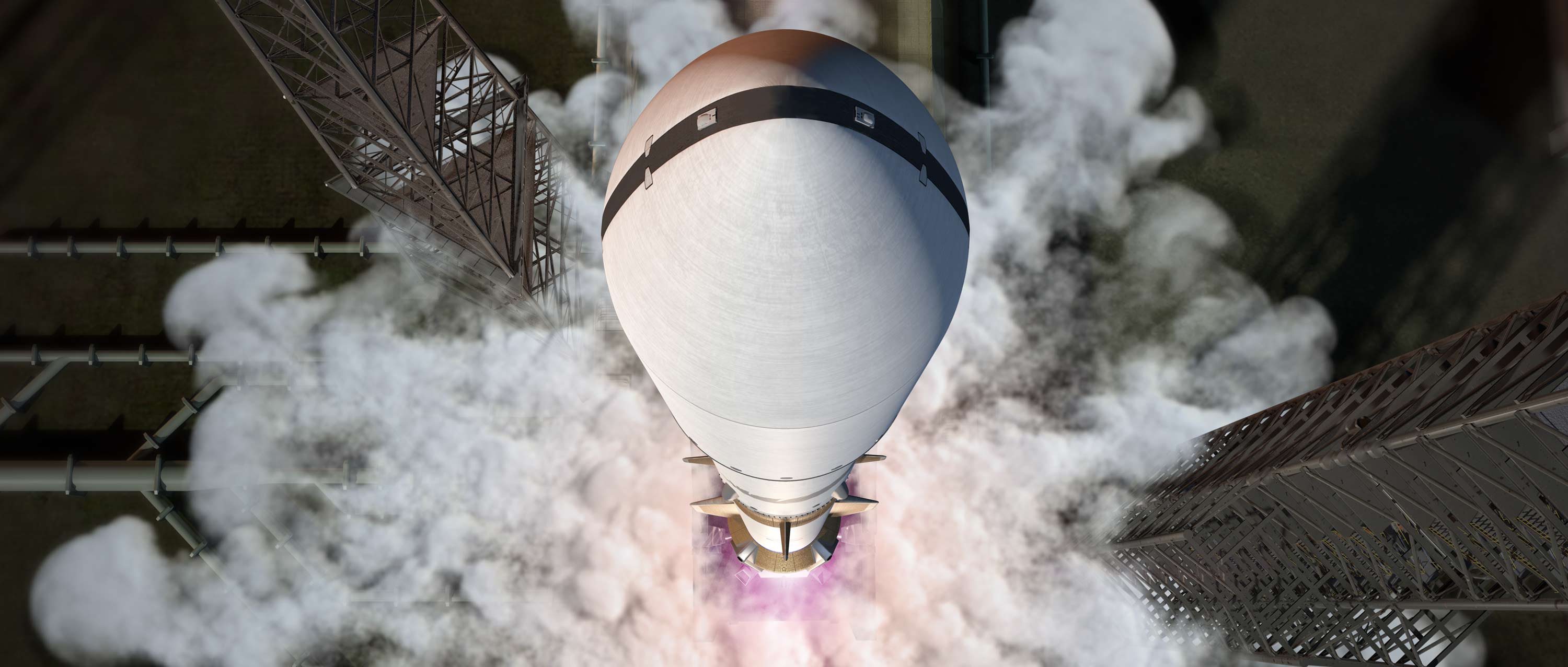
Continuity looks like repetition from the outside and active error control from within. Sentinel overlaps instruments. Kalshi must preserve market quality as participation grows. Germany has to rehearse the loss of orbital services. Blue Origin must inspect a recovered stage without letting inspection consume the fleet.
The premium belongs to systems whose next output is credible before it exists. That credibility is earned by calibration, liquidity, redundancy, and process—not declarations of permanence.
This week built four kinds of baseline. The future will be measured by how well each survives its first discontinuity.
Continuity turns observations and contracts into infrastructure. It also hides drift unless overlap and settlement remain rigorous.
A good time series carries calibration; a good market carries liquidity and clear resolution; a good defense picture carries uncertainty; a good manifest carries production evidence.
Week 67 made persistence valuable. The price of persistence was maintaining comparability while every component changed.