Frontier MechanicsField report / 107
Frontier Mechanics Week 107: Redwood designs an accelerator, RoboSense ships its photon counters, Europe buys launch options, and the Fed questions its own signal
An FPGA running AI-designed logic, a lidar supplier's manufacturing numbers, milestone-funded rockets, and the feedback loop between central bankers and traders. Reporting for August 24-30, 2026.
A chip design can become obsolete before the factory finishes making it. A rocket company can run out of money before its first customer is allowed to buy a launch. A central bank can accidentally learn what it just told the market. This week offered several versions of an awkward engineering problem: the decision you make today changes the evidence you will use tomorrow.
The most interesting announcement came from Architect Labs, which put an AI-designed accelerator on an FPGA. There is working hardware here, and there are projections that still need silicon. Keeping those separate makes the result more useful. Elsewhere, RoboSense reported a large increase in robot lidar shipments, ESA signed its first European Launcher Challenge contracts, and Kevin Warsh used Jackson Hole to question routine interest-rate guidance. Each story rewards a closer look at what the number actually measures.
Chip design / AI systems
Redwood gets to an FPGA before the workload moves again
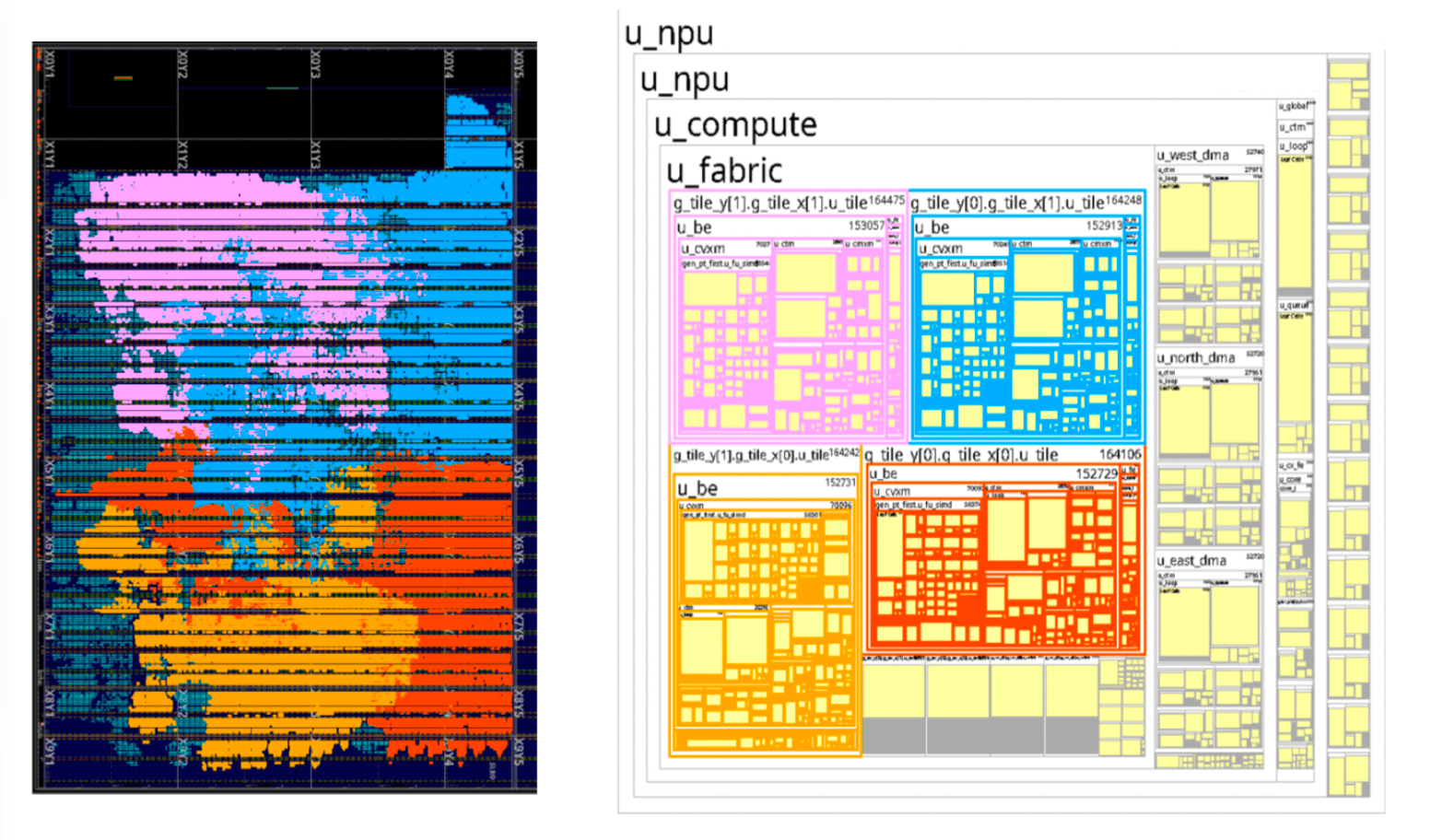
Architect Labs published Redwood this week: an accelerator whose design and verification artifacts, firmware, and kernels were generated by its AI system from a specification written by two people. The company says the work took under two weeks. Its demonstrated Nano configuration runs Qwen3-0.6B on an AMD Versal FPGA at 250 MHz and 12.1 tokens per second. The much more impressive 3.4-times performance-per-watt comparison with Jetson Orin Nano is a projected ASIC result, using a Samsung 8 nm process assumption. It is not a measurement from a fabricated Redwood chip.
The architecture uses a mesh of tiles with local memory, RISC-V control, matrix and vector execution, and explicit transfers. That is a sensible arrangement for a problem dominated by where operands sit and when they arrive. In a conventional software optimization, the instruction set and memory hierarchy are fixed. Here the software can ask the hardware to change, and the hardware can ask the compiler to schedule around a cheaper implementation. The search includes the boundary between them.
Consider a deliberately simple inference workload: one user generates one token at a time from a model whose weights do not fit in on-chip memory. If each token requires reading W bytes of weights from memory with sustainable bandwidth B, W/B is a useful lower bound on the weight-transfer time. Doubling the number of multiply units does little if they spend half their lives waiting. Quantization, reuse, and overlap can matter more than the advertised arithmetic rate. This is why a single-batch accelerator should be judged on the actual sequence and precision it runs, not a matrix multiplication peak that assumes abundant independent work.
Local scratchpad memory changes the bargain. Software knows exactly where a tile's operands live and can prefetch the next block while computing the current one. It also becomes responsible for getting that schedule right. A missing dependency can produce a wrong answer; an unnecessary dependency produces an idle machine. Credit-based links add another constraint: a sender must know that the receiver has space. Efficient dataflow requires enough buffering to absorb uneven execution without allowing circular waits to freeze the network.
Verification is where the two-week claim needs the most careful interpretation. A generated implementation and a generated testbench can agree because both misunderstood the same sentence. Code coverage says which implementation paths ran. Functional coverage says whether the scenarios someone chose were exercised. Neither independently proves that the specification captured the intended product. Formal assertions are stronger within their assumptions, but an assertion that ignores reset sequencing, overflow, or backpressure cannot establish those behaviors by implication. The specification remains a very expensive place to make a small mistake.
An effective review would therefore introduce evidence the generating system did not create for itself. Compare numerical outputs with an independently implemented reference across extreme inputs. Randomize memory stalls. Reset different clock domains at inconvenient moments. Mutate a correct block and check whether the tests notice. Ask the design to recover from malformed commands. These are proposed acceptance tests, not additional Redwood results. Their purpose is to distinguish rapid artifact production from rapid discovery of inconvenient bugs.
An FPGA demonstration earns real credit because it crosses the simulation-to-hardware boundary. It still leaves physical design, timing closure at the target process, power delivery, packaging, thermal behavior, fabrication variability, and post-silicon validation. Even a correct RTL design can become an unattractive chip once the wires and clocks are counted. The ASIC projection should carry the assumed voltage, frequency, memory system, and utilization into any comparison. Otherwise a reader is comparing an estimated component with a measured development board and calling the difference architecture.
The commercial implication is more interesting than replacing a chip team with a prompt. Suppose a specialist workload has a profitable lifetime of eighteen months. A design cycle consuming most of that window makes specialization hard to justify. Reducing the early iteration cycle lets a team wait for better workload evidence before committing to masks and manufacturing. That option has value even if experienced engineers still own the specification and signoff. Redwood's next convincing milestone would be a fabricated device whose measured behavior survives that entire chain, accompanied by enough workload detail for someone else to reproduce the comparison.
Robotics / sensing
RoboSense's photon counters become a manufacturing business
RoboSense's August 26 results put some quantities behind the robot boom. It reported 719,200 lidar units sold in the first half, including 282,600 for robotics and other applications, with that latter category up 510.4 percent year over year. Revenue rose 30.2 percent to about RMB 1.02 billion. The company also said E2, its first production lidar using the internally developed Peacock SPAD chipset, had entered volume production and customer delivery. Those are supplier-reported figures, but they describe a manufacturing operation rather than a demonstration video.
A SPAD is a single-photon avalanche diode. Bias it above breakdown, and a detected photon can start an avalanche large enough to register as an electrical event. Quench that avalanche, reset the detector, and measure again. In direct time-of-flight ranging, a laser pulse leaves the sensor and some photons return from the scene. The distance follows from half the round-trip travel time multiplied by the speed of light. A one-nanosecond timing error corresponds to roughly fifteen centimeters of range error before other sources of uncertainty are considered.
The difficulty is that the detector also sees sunlight and noise. A histogram of repeated photon arrival times can reveal a return peak against that background, but the detector is unavailable during its recovery interval. At high photon flux, earlier arrivals can distort the measured distribution. More sensitive is therefore not automatically more accurate. Optical filtering, timing circuitry, detector dead time, illumination power, and the estimator have to work together. The SPAD literature treats these as coupled statistical constraints, which is a better way to read a sensor specification than assuming that every detected photon is useful signal.
For a robot, the cost of a bad range estimate depends on where it occurs. A mower confusing a dark fence with open space has a different problem from a manipulator trying to separate two surfaces a few centimeters apart. A single maximum-range number does not answer either question. I would want detection probability at specified reflectivity, false-positive rate under sunlight, minimum range, behavior at glass and specular metal, and performance while the sensor itself is moving. A robot buyer needs a distribution of failures, preferably measured on objects that have never appeared in the marketing department.
Integration can reduce the number of separate components and calibration steps. That is a plausible reason to put more of the sensing chain into an internally controlled chip. It also concentrates risk. A board designer may be able to swap one discrete part after a supplier problem; a custom sensor ASIC can require a respin. Yield, test coverage, packaging, and long-term availability become part of the autonomy stack even though none appears in the planner's diagram. Volume shipments are useful evidence precisely because they expose a design to those less glamorous constraints.
The shipment and revenue growth rates deserve separate denominators. A 169.6 percent increase in total units alongside 30.2 percent revenue growth does not establish a unit-price decline of any particular size. Product mix, non-lidar revenue, and timing can differ. It does tell an analyst not to equate unit growth with economic value. A smaller sensor entering a much larger market may be a good business at a lower price, but that requires margins, manufacturing efficiency, and repeat orders to support the argument.
RoboSense also outlined cameras, tactile sensors, and joint modules, with commercialization milestones extending into later quarters. Those future deliveries should not be counted as this week's installed base. The attraction is understandable: a component supplier already selling into robot companies can expand its share of each machine. The technical challenge is that a force-sensitive fingertip and an optical range sensor have different calibration, durability, and failure requirements. Customer relationships transfer more easily than all of the engineering knowledge.
Imagine a customer ordering ten thousand sensors for a new robot. The useful questions are whether those sensors remain interchangeable after temperature cycling, whether firmware updates preserve their timing behavior, and whether replacements remain available in year four. A cheap, clever detector becomes an expensive subsystem if every field replacement needs a specialist. E2's production milestone matters because it begins that test. The next evidence to watch is repeat deployment across customers with different environments, accompanied by reliability and economics that remain credible after the first large shipment.
Launch economics
Europe buys options on rockets that still have to reach orbit
ESA announced the first European Launcher Challenge contracts on August 27: €197.8 million for Isar Aerospace, €186.9 million for Rocket Factory Augsburg, and €158.9 million for PLD Space. Funds become available as milestones are met, and the program requires an orbital launch before 2028. MaiaSpace's award process was still approaching completion. That last detail matters: a company being in the competition and a signed contract are different events.
The policy problem is familiar to anyone trying to sell hardware before it exists. Customers want flight heritage before committing a valuable satellite. Investors want customer commitments before financing the hardware that would establish flight heritage. Government can interrupt that loop by purchasing development progress and future access. It takes some risk before commercial buyers will, in exchange for the possibility of more suppliers later. The quality of the arrangement depends on what counts as progress and what happens when a milestone is missed.
A milestone payment should buy a reduction in uncertainty. An engine completing a representative test sequence tells you something different from a factory opening. A full-duration stage firing tells you more about integrated plumbing and control than an isolated engine test. Reaching orbit establishes a capability that no stack of component tests can substitute for. Yet even a successful orbital flight leaves questions about repeatability, production cadence, customer handling, and the cost of the next vehicle. A useful contract moves through these stages without pretending that one proves all the others.
The three awards add to €543.6 million, but the sum is not equivalent to money transferred this week. Nor is it a purchase price for three mature launch businesses. Treating the amount as a portfolio of conditional commitments gives a better picture. ESA can obtain evidence from several architectures and teams, and Europe gains alternatives if one program slips. That is a reasonable insurance argument. It becomes less convincing if political pressure prevents a failing project from ever losing support, because then the option quietly turns into an obligation.
Payload capacity comparisons also need an orbit attached. ESA listed RFA One's current target as up to 500 kilograms to a 500-kilometer sun-synchronous orbit, Miura 5 at up to 540 kilograms to sun-synchronous orbit, and Spectrum at up to 1,000 kilograms to low Earth orbit. Those are development targets with different mission definitions. They cannot be ranked as though each rocket were carrying the same spacecraft to the same inclination from the same launch site. Inclination, altitude, recovery strategy, and deployment requirements all spend performance.
A small dedicated launcher may lose a simple price-per-kilogram contest and still win a mission. Suppose a satellite earns revenue only after entering a particular orbital plane. A cheap rideshare that leaves it months of propulsion and commissioning work away from that plane carries an opportunity cost. A dedicated launch can sell schedule and orbital precision as well as mass. Conversely, a customer with a flexible orbit and a tolerant schedule may rationally choose the cheaper shared ride. Europe does not need every new launcher to win every comparison; each needs enough customers whose constraints make its service worthwhile.
There is a less pleasant second-order effect. Public support can help several companies survive long enough to reach orbit, then leave all of them competing for too few missions to sustain healthy utilization. Low cadence keeps unit costs high, which increases dependence on institutional demand. The answer cannot be inferred from the number of startups selected. It requires a credible manifest, production learning, and a view of which launches customers will actually buy at commercial prices. A diversified supplier base is valuable, but permanent underutilization is costly insurance.
I would judge the Challenge by the options Europe can exercise at its conclusion: how many services can deliver a payload, at what notice, with what demonstrated reliability, and under what commercial terms? That shifts attention away from the ceremony around the contracts and toward the information each funded test produces. The program has now crossed a real contractual threshold. The next thresholds belong to the vehicles, and the atmosphere is unlikely to give credit for how carefully the funding was allocated.

Markets / feedback
At Jackson Hole, the Fed questions the signal it sends itself
In his August 28 Jackson Hole speech, Federal Reserve Chair Kevin Warsh argued for a narrower role for routine forward guidance. His concern was a feedback loop: markets infer the future from the Fed's statements, and the Fed then reads market prices as evidence about the future. The speech also discussed AI investment and productivity, while insisting that inflation must move convincingly toward the 2 percent objective. It did not announce an interest-rate decision.
The feedback problem is easiest to see with a hypothetical. A central bank says it expects to cut rates soon. Traders lower the interest rates embedded in futures contracts. At the next meeting, officials observe those prices and conclude that informed investors expect a weaker economy. But part of the price move contains the bank's own forecast. Counting it as independent confirmation gives the original view more confidence than the underlying information deserves. Nobody needs to behave irrationally for this to happen.
An observed bond yield also combines several things that an analyst would like to separate. Expected future short rates are one component; compensation for bearing duration risk is another. Inflation-linked and nominal bonds introduce further differences involving inflation compensation, liquidity, and market structure. A change in the headline yield is not a clean sensor reading of one economic variable. For a quant model, this is an identification problem before it is a forecasting problem: what latent process could have generated the movement, and which other observations distinguish the possibilities?
Communication can still improve policy. If a central bank explains how it reacts to inflation and employment, households and firms can make decisions with less uncertainty about arbitrary changes of direction. Emergency guidance may also matter when ordinary rate changes have limited room to work. The strongest defense is therefore conditional guidance tied to a reaction function, rather than a promise about a date. Warsh's criticism raises a question about how much specificity provides useful information before it becomes a commitment that is expensive to revise.
There is an engineering analogy, though it has limits. A controller acts on a system, then measures the system after the action. If the estimator assumes the measurement is independent of its own intervention, it can become overconfident. Economies add strategic people who anticipate the controller and change behavior before it acts. Publishing a forecast can therefore alter the object being forecast. More observations do not fix that automatically when all of them incorporate the same public signal.
AI makes the supply-and-demand distinction especially awkward. Investment in data centers, power equipment, and skilled labor creates demand now. Productivity improvements may expand supply later, unevenly across sectors. A firm buying compute is not evidence that the economy has already produced an equivalent amount of additional output. Equally, weak hiring in one task does not establish that total productive capacity has stopped growing. The relevant timing differs across construction, equipment delivery, software adoption, and changes in how organizations work.
For a simple numerical example, a business that invests $100 today and saves $15 a year later still has to finance the interval before those savings arrive. Higher financing costs can prevent a productive project from happening, but easy financing can also encourage projects whose eventual savings never materialize. A central bank cannot observe every project's true return. It works with aggregate evidence while firms make local bets. This is why an attractive long-run technology story cannot, by itself, determine the appropriate short-term interest rate.
For traders, the practical implication is to label the information source before treating two signals as corroboration. A survey taken after a major speech, a futures move during it, and an analyst note repeating it may be three measurements of the same communication event. A robust research process asks what arrived independently: realized prices, orders, wages, credit conditions, and revisions to previously reported data. Those series are imperfect too, but their errors are not necessarily identical.
The speech leaves a difficult operational question. Less guidance could reduce circular inference, or it could increase the value of every ambiguous phrase officials utter. Markets will continue trying to predict policy because their contracts depend on it. The test is whether subsequent decisions and explanations make the reaction function easier to understand without substituting a promised path for fresh evidence. The Fed wants to listen to the market. It also has to recognize its own voice in the recording.
The week's strongest evidence was specific: a model running on an FPGA, sensor units shipped, contracts signed, a policy argument placed on the record. Each leaves a different uncertainty unresolved. Faster design does not settle fabrication, shipment growth does not settle margins, and a funded launch program does not settle orbital reliability.
What I like about these stories is that the next useful test is visible. We can ask for silicon measurements, repeat customers, flight results, and policy decisions made against fresh data. Those are harder to produce than a compelling forecast, which is exactly why they are worth waiting for.