Frontier MechanicsField report / 113
Frontier Mechanics Week 113: A nuclear clock holds its frequency, heat shields ride with the trash, PowerBlock buffers an AI rack, and a global shutter freezes the scene
A clock closes its feedback loop, twelve capsules turn disposal into an experiment, solid-state batteries look beyond cars, and machine vision gets a new sensor. Reporting for October 5-11, 2026.
The most charming experiment this week is hidden in a cargo vehicle's disposal plan. Twelve small capsules are meant to turn atmospheric reentry into useful heat-shield data. The vehicle is going to encounter an extreme environment anyway; the researchers would like it to send back measurements before the opportunity disappears.
Elsewhere, a nuclear clock moved from locating a resonance to holding an oscillator on it, QuantumScape introduced a reference design for energy storage beside AI servers, and OMNIVISION announced a global-shutter imaging chip. All four stories depend on timing, but at very different scales. There is the moment a camera samples a moving scene, the interval a battery must bridge, the brief window for a capsule to report, and the much longer interval over which a clock must remain trustworthy.
Precision instruments / physics
A nuclear clock starts correcting its own oscillator
TU Wien described a self-stabilizing nuclear clock on October 8, following publication in Nature the previous day. A thorium-containing crystal supplies the nuclear transition, and a feedback system adjusts the interrogating laser to remain on resonance. The team reports operation for more than twenty-four hours without intervention and precision around one part in a quadrillion. The result appeared as a preprint in June, so the news this week is peer-reviewed publication and the accompanying institutional account, not the first public disclosure of the experiment.
A clock is more than a frequency you have measured once. It needs an oscillator that keeps producing cycles and a way to correct that oscillator against a reference. A laser's frequency wanders with its environment and internal behavior. The reference tells the control system whether to increase or decrease it. Counting or comparing the resulting oscillation then connects the physical resonance to a time measurement. Finding a narrow spectral feature is an important ingredient; operating a reliable loop around it is a different engineering accomplishment.
The distinguishing reference here sits in a nucleus rather than an electronic transition. That makes thorium interesting because an accessible nuclear transition offers a different balance of sensitivity to environmental disturbances and fundamental physics. It does not make the solid surrounding the nucleus irrelevant. The crystal, temperature, defects, interrogating light, and measurement system can still shift or broaden the observed response. A reference that is intrinsically attractive can be difficult to realize as an instrument. Much of precision metrology consists of learning which apparently negligible influence is currently the largest one.
A simple feedback picture helps. Probe slightly to either side of a resonance and compare the response. If the two measurements differ, their difference can provide an error signal. Feed that signal back to the laser. Gain that is too low corrects drift slowly; gain that is too high can amplify noise or destabilize the loop. Measurement delay also matters. This describes a general locking principle rather than every implementation detail of the Vienna apparatus, but it explains why keeping a clock running is not just repeating a spectroscopy measurement indefinitely.
Precision, stability, and accuracy deserve separate words. A device can repeat a biased answer very consistently. Stability describes how its fluctuations behave over averaging time, while an accuracy claim requires accounting for systematic shifts relative to the intended reference. A quoted fractional figure should therefore travel with the measurement method and interval. TU Wien explicitly says this instrument does not yet compete with the best optical atomic clocks. That qualification makes the accomplishment clearer: an unfamiliar reference has become an operating clock, not instantly the world's best clock.
As an illustration, a constant fractional frequency error of 10 to the minus 15 would accumulate roughly 86 picoseconds in a day. That arithmetic is not a guarantee of the experiment's daily time error; real errors vary and systematic effects must be characterized. It is a way to make the scale tangible. At that level, the wiring, temperature history, calibration chain, and comparison instrument are no longer background details. They are part of the result. A beautiful resonance with an unreliable measurement chain is still an unreliable measurement.
Twenty-four unattended hours matter because they expose a different class of problems from a short, carefully watched run. Locks can be lost. Optical alignment can drift. A component can recover into the wrong state after a disturbance. An experimenter standing nearby can quietly become an essential subsystem. Removing that person from the control loop, even for a day, is evidence about the instrument's behavior. It is not yet evidence of field readiness, but it points toward the reproducibility that would make the technique useful outside its originating laboratory.
The next improvements proposed by the team involve the crystal and the laser. I would also watch uptime, reproducibility between devices, and the accounting for environmental shifts. A clock becomes a widely useful tool when a second laboratory can operate it and understand its uncertainty. The interesting advance is therefore not a dramatic adjective attached to thorium. It is the gradual conversion of a physical possibility into something that can stay on frequency while everyone goes home.

Aerospace / experimental design
Twelve heat-shield capsules ride inside the disposal mission
NASA's October 9 report describes twelve KREPE-3 experimental capsules carried inside Cygnus XL NG-24, with an onboard photograph dated October 7. The experiments include a printed heat shield, MERINO carbon-and-phenolic materials, a Dragonfly-shaped aeroshell, and a deployable ADEPT concept. Sensors are intended to record conditions and transmit data during reentry. The report mixes mission status with future-tense descriptions of the experiments; it does not provide a completed set of reentry performance results. Those results should not be inferred from the word demonstrates in the headline.
Atmospheric entry is an awkward place to learn cheaply. The vehicle moves fast, the surrounding flow changes regime, and the experiment may not be recoverable. A laboratory can reproduce selected heat fluxes or pressures, but reproducing every coupled feature of a flight is difficult. Riding inside a vehicle already destined for destructive reentry creates a different bargain. The experiment borrows the mission's trajectory and opportunity while accepting constraints on release, orientation, communications, and the amount of hardware that can be carried.
A heat shield manages energy before that energy reaches something important. Ablative materials can consume heat through chemical decomposition and material loss while gases and a char layer alter the transfer process. Insulation delays heat reaching the interior. Geometry affects the surrounding shock and flow. Calling one material better requires specifying what it is supposed to protect, for how long, under which heating and pressure history, and at what mass. A shield that survives a brief peak is not automatically suitable for a longer, lower-intensity exposure.
This is why temperature alone is not enough. A sensor buried beneath the surface records the response of the material and the local thermal path, not a direct universal reading of the external heat load. Interpreting it requires sensor position, material properties, timing, and a model of heat transport. Motion measurements help reconstruct the capsule's orientation and deceleration. Optical and pressure data can add context. The value comes from relating the channels, so that an unexpected temperature rise can be associated with a change in flight conditions rather than guessed at afterward.
Small capsules also make scaling a live question. Surface area and volume do not grow at the same rate. A tiny test article can have a different thermal response, structural stiffness, and flow behavior from a large vehicle. Results can validate material models and reveal failure mechanisms without proving that a full-scale aeroshell is ready. That is a useful outcome. The mistake would be to skip the intermediate modeling work and treat twelve small flights as twelve certifications of much larger systems.
The deployable concept adds an especially interesting tradeoff. A larger effective entry area can lower ballistic coefficient, commonly expressed as mass divided by drag coefficient times reference area. Lower ballistic coefficient can change where and how a vehicle decelerates. Packaging a large surface into a smaller launch volume creates value, but the deployment and load paths become essential. A flexible or unfolding shield must maintain a useful shape under aerodynamic forces. It has exchanged one constraint, launch volume, for several mechanical and control constraints.
Telemetry is part of the experimental design because the hardware may not come back. Data collected but never transmitted are not a scientific result available to the team. Storage, packet priorities, antenna behavior, power, and the timing of communication opportunities can determine which part of the flight is understood. I would want important channels protected against losing the final packet, with enough timestamps and calibration information to reconstruct the sequence. That is a general design requirement, not a claim about a particular KREPE packet format.
The program's appeal is the possibility of learning more often. If modest experiments can exploit disposal events, teams may test competing materials before committing to a larger flight article. More tests only help if their differences are controlled and their conditions are known. Otherwise the program collects twelve incomparable anecdotes. The promised payoff is a better validated model and a more informed next design, with the dramatic part of the flight serving the decidedly undramatic purpose of reducing uncertainty.
Energy storage / AI infrastructure
QuantumScape puts a battery beside the compute load
QuantumScape introduced QS PowerBlock on October 8, an adaptable solid-state lithium-metal battery reference design for energy storage inside AI data-center power racks. It targets 800-volt DC architectures. The company's comparison claims four times the power density and five times the runtime of relevant Open Rack V3 benchmarks, with the release qualifying its evidence as prototype tests and modeled configurations under controlled conditions. A reference design is not a volume shipment, and these comparisons are not measurements from a customer's production data center.
The application makes sense because a server rack is not a constant resistor. Workload phases can change demand quickly, and upstream power equipment must accommodate the difference. Local storage can supply energy during a shortfall or absorb it while demand falls. The battery is useful even when the grid has not failed. It can act as a buffer between two systems that prefer different time profiles, while a longer-duration backup system handles a different problem. These roles should be specified separately rather than bundled into the vague promise of resilience.
Power and energy answer different questions. A hypothetical one-megawatt load needs about 2.78 kilowatt-hours for ten seconds and about 16.7 kilowatt-hours for one minute, before conversion losses and reserves. The energy amount may sound manageable; delivering it at the required power, repeatedly and safely, is the harder requirement. A module's kilowatt-hour rating does not tell you its peak current, heat generation, voltage behavior, or allowed cycle profile. Nor does a short high-power test establish a long useful service life.
Higher distribution voltage reduces current for a given power. In an idealized one-megawatt calculation, 800 volts corresponds to 1,250 amps. Actual systems divide loads and use conversion stages, so that is not a proposed cable specification. It shows why bus design, connectors, protection, and fault management remain substantial engineering problems even at a higher voltage. Resistive loss scales with current squared for a fixed resistance, but voltage also changes insulation and switching requirements. There is no free conversion from an attractive cell to a safe rack.
The battery chemistry is only one part of qualification. A customer needs behavior across temperature, state of charge, age, and manufacturing variation. It needs to know what the module does during a fault, how one failure is isolated, and whether replacement can happen without creating an unsafe condition. A solid electrolyte changes possible failure pathways; it does not justify deleting system-level safety tests. The electronics, busbars, mechanical enclosure, and neighboring equipment all remain capable of producing unpleasant surprises.
There is also a difference between emergency reserve and routinely dispatched storage. A battery held mostly ready for an outage sees a different duty cycle from one smoothing frequent workload transitions. The latter can accumulate many shallow cycles, with the details of depth, temperature, and rest periods affecting degradation. A procurement comparison should use the actual expected duty profile. Multiplying a peak performance number by an assumed cycle life from another operating regime is a reliable way to create a very persuasive spreadsheet about an imaginary product.
The strongest business case is that expensive compute should not be limited by a poorly matched power interface. A compact buffer may let an operator use equipment more effectively or manage transients without oversized upstream components. But the savings have to exceed the storage system's purchase, conversion losses, maintenance, and replacement cost. The comparison should include the alternatives, which may involve different storage technologies, power-system design, or workload scheduling. A battery that wins an automotive metric does not automatically win the data-center calculation.
For QuantumScape, the announcement opens a market with different priorities from vehicle range. That could be an intelligent use of a technology whose strengths include high-power operation. The evidence I would wait for is a fully specified module operating under a customer's repeatable load profile, followed by qualification and manufacturing data. The reference design makes the proposal concrete enough to evaluate. It has not yet answered the factory and service questions that determine whether the proposal becomes a business.
Machine vision / sensors
A global shutter freezes geometry without freezing the light budget
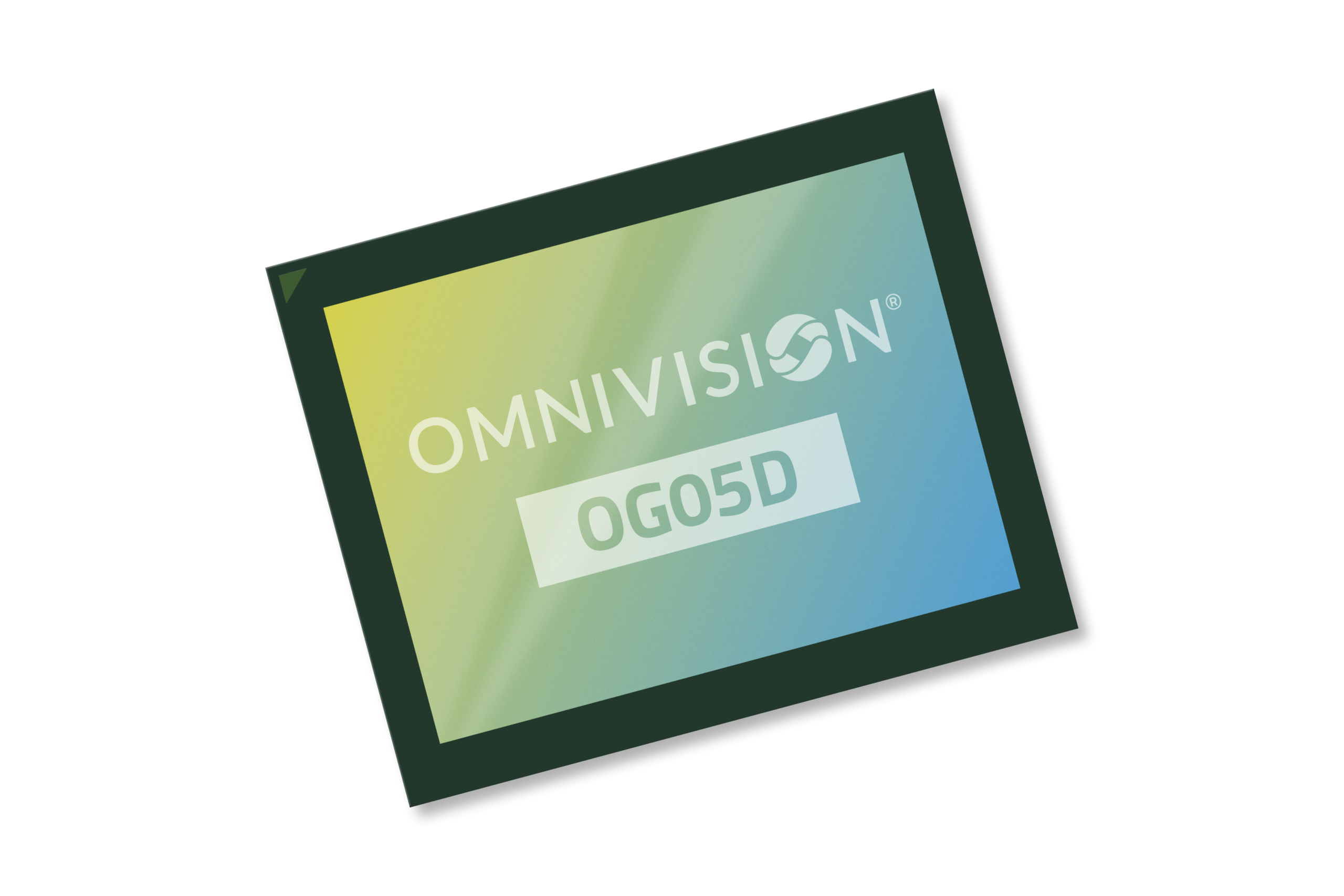
OMNIVISION announced the OG05D on October 5: a five-megapixel, 2.2-micron global-shutter sensor aimed at industrial and robotic vision. Its stated modes include 146 frames per second in linear operation without cryptography, 130 with it, and 60 in three-exposure HDR. Samples are available, while mass production is targeted for the fourth quarter. Those modes should not be combined into a fictional 146-frame-per-second HDR specification. Choosing a mode changes what the rest of the camera has to support.
Rolling shutter reads different rows at different times. If the camera or subject moves during that interval, a straight object can appear bent or tilted because the image combines multiple moments. A global shutter exposes the scene together, preserving geometry more faithfully at that instant. That is useful when a robot estimates pose, measures parts, or watches a rapidly moving conveyor. The correction is temporal, not magical: an exposure that lasts too long can still blur motion even when every pixel starts and stops together.
Consider a hypothetical conveyor moving at one meter per second. In one millisecond, an object travels one millimeter. Whether that is tolerable depends on the image scale and measurement task. Shortening exposure reduces blur but collects fewer photons. The designer can add light, widen the lens aperture, or accept more noise, each with consequences. Controlled illumination can be an excellent investment because it improves the signal before any model receives it. Better software cannot reliably recover a small feature that never produced enough distinguishable photoelectrons.
HDR tackles a different problem: fitting bright and dark regions into a useful measurement. Multiple exposures can preserve highlights while collecting more signal from shadows. Moving objects complicate the combination because their positions differ across exposures. A global shutter helps within each exposure; it does not make separate exposures simultaneous. An industrial system should test the exact motion and illumination pattern it expects, including flickering sources or strobed lights. The product's HDR rate describes a supported operating mode, not immunity to every temporal artifact.
Small pixels allow more sampling points in a given area, but the optics must deliver useful detail to them. Diffraction, lens aberrations, focus, and vibration can erase the apparent resolution advantage. Full-well capacity and noise also influence the usable signal range. A stacked backside-illuminated architecture can help allocate circuitry and light-sensitive area, but camera performance remains a joint result of sensor, lens, illumination, and processing. Buying the highest pixel count is an incomplete optical design strategy.
The data path is substantial. At roughly five million pixels, a hypothetical twelve-bit uncompressed stream at 146 frames per second contains about 8.8 gigabits per second of pixel data before overhead. That is arithmetic for scale, not a claim about the sensor's selected output format or interface utilization. A downstream processor must ingest, buffer, and process the stream without accumulating stale frames. Region-of-interest readout, lower rates, or a different representation may be better choices for a task that only needs a narrow measurement area.
Near-infrared capability adds flexibility for controlled illumination, while color and infrared processing introduce calibration questions. A material that looks uniform in visible light may behave differently in the infrared, and a classifier trained under one illumination condition can fail under another. The deployment should preserve the spectral assumptions of its training and validation data. That point sounds obvious until a maintenance team replaces a light source and a previously reliable inspection model starts rejecting good parts.
What I like about this announcement is that its tradeoffs are inspectable. Frame rate, shutter mode, HDR, security processing, and availability are distinct entries rather than one general claim about better robotic vision. The practical next step is camera-level testing under the actual motion and lighting. Sampling means engineers can begin that work. It does not mean the future production schedule or the performance of a complete camera has already been demonstrated.
A useful instrument tells you what interval it can handle. The clock must stay locked, the capsule must report before its opportunity ends, the rack buffer must bridge a defined power event, and the camera must collect a scene before motion corrupts it. Their most important specifications are conditional statements about operation, not isolated record numbers.
The week's announcements are promising at different stages. One has sustained laboratory operation, another has a flight opportunity, a third offers a reference design, and the fourth has samples. Keeping those stages visible is how the archive can remain useful when the next announcement arrives.